
SEED Infotech is leading IT Training Institute in India

Category: Uncategorized

Mastering MLOps: The Hidden Skill That Will Set Future Data Scientists Apart

Imagine you are a part of building a machine learning model. Its outline fascinates your peers. However, when it is time for its deployment, you see a sudden drop in its performance and everything falls apart within minutes. Who will come to your rescue?

Instead of waiting for someone to sort it out, you, as a data scientist can take charge. But it requires you to add one thing to your expertise. That is MLOps. It bridges the existing gap between Machine Learning and software development. Let’s get started to learn how to incorporate it for your data scientist career!

What is MLOps?

Machine Learning Operations (MLOps) involves practices that are aimed at streamlining and automating the entire machine learning (ML) lifecycle. Before going much into MLOps, let’s discover what ML is. Machine Learning is a branch that comes under Artificial Intelligence. Instead of programming the systems as in traditional methods, ML uses data for the systems to learn things and improve their performance.

An example of a widely used ML is ChatGPT. Therefore, MLOps focuses on developing and deploying the ML models, and its role continues throughout its lifecycle. This is because it extends its work to monitor and maintain the models.

To achieve all of its roles, it works in collaboration with DevOps principles. It focuses on software development. By applying DevOps principles, MLOps enhances the reliability and efficiency in building and managing ML models.

Mastering MLOps

Mastering MLOps involves some procedures. Let’s check what they are:

Understanding MLOps Lifecycle

The first step in mastering MLOps involves understanding how its lifecycle works. The entire workflow includes:

  1. Data collection
  2. Model versioning
  3. Feature engineering and storage
  4. Model training and evaluation
  5. Model deployment
  6. Monitoring and automation

Start with DevOps Basics

Since MLOps extends to DevOps, it’s important to understand the basics of it. You can start learning version control,  containerization, and orchestration. You can also learn the process of Continuous Integration (CI) and Continuous Deployment (CD).

Tools and Techniques

Most of the ML systems are cloud-based. Hence, you need to have knowledge about the cloud platforms like Google Cloud Platform, Amazon’s AWS, and Microsoft Azure. You also need to learn pipeline orchestration such as MLflow, Kubeflow, and SageMaker for automation of the systems. This also works for tracking the models you have developed.

The deployment stage is more important than the production stage. So, for successful deployment, you need to know the containerization tools like Docker and Kubernetes. Merging DevOps will be effective in maintaining the efficiency and workflow of the ML systems.

How Does MLOps Matter for the Future of Data Scientists?

As technology expands its expertise, data science is also evolving. This in turn increases the expectations of data scientists to create reliable and scalable machine learning systems. Here are the reasons why MLOps matters for future data scientists:

Improves Performance

Introducing MLOps provides lifetime surveillance. With that, you can find out if there are any issues and rectify them at the earliest. It helps to improve the performance and maintain system accuracy and reliability.

Implements Automation

MLOps helps in handling tasks automatically without human intervention. Such automated tasks are seen as effective in system development and deployment. This even decreases the manual effort and certain delays in the deployment process.

Promotes Collaborative Workflows

ML developers, data scientists, and DevOps engineers will work collaboratively if they are building an ML system with MLOps. This combined approach integrates the development and deployment teams into a unified workflow. It helps to accelerate the delivery of the systems.

Scalable Systems

With MLOps, the ML system goes a step ahead in its development and functions. It becomes scalable with automations and standardized workflows. Which means, tasks that are repeated will be automated. This reduces errors and increases the system’s reliability.

Real-time Monitoring

The traditional methods failed to detect the issues in real-time. Gone are the days and we have evolved a lot. That’s why real-time monitoring is a specialty of MLOps. It monitors and alerts the systems to track models in production, allowing teams to detect issues early. This also prevents any failures in production.

Wrapping Up

The world is driving towards automation. No matter if you are in your home or in a public place, you are now surrounded by automated machines or systems. Therefore, the ability to produce scalable and reliable machine learning systems is not a necessity, it is a mandatory one. It provides a lot of opportunities for data scientists to give successful and efficient models to the world. To put it in simple terms, the world is waiting for your massive expansion!


What Top Recruiters Look for in a Student with Data Analytics Skills

The Data Science ecosystem provides businesses with crucial tools for making better decisions.  This ecosystem is expected to develop more by 2026. This shows that data science is one of the most demanding jobs in today’s world. Businesses continuously compete to attract the greatest technical and non-technical people.  You can access various jobs by obtaining expertise in some advanced skills. Are you curious about the skills you need as a data analyst? Continue reading the blog.

Technical Proficiency

Python and R have been popular programming languages but are especially important in data science. A data scientist must also be knowledgeable in SQL. A data scientist should be proficient in pattern recognition, supervised and unsupervised learning, and data mining.

Along with practical expertise in data processing and visualization technologies like Power BI, Tableau, they should be proficient in statistical analysis and machine learning techniques. Technical proficiency is one of the most crucial credentials for data science positions, which every recruiter looks for.

Excellent Problem Solving and Analytical Thinking Skills

Finding valuable insights from complicated datasets is the goal of data analytics. It goes beyond simple math calculation. The ability to think analytically and solve problems is essential for interpreting vast amounts of unprocessed data. Employers want applicants who can analyze data crucially and turn those trends into useful insights.

One talent distinguishing good candidates is the capacity to see a pattern in sales data and offer a plan for enhancing performance. The skills in solving problems frequently include figuring out how to use data to answer business questions and interpreting the findings to benefit the company.

Hands-on Experience and Projects

Practical experience can help you better understand your strengths and capacities and get exposure to life circumstances. Furthermore, practical experience is essential to fully understand the professional challenges associated with a data science position.

Developing a career in data science is always about how well you can apply your practical skills to find a solution rather than merely identifying an issue. Obtaining a wealth of practical experience is essential for a successful career in data science.

Microsoft Excel

When you think of Excel, you probably think of a spreadsheet, but this application has more analysis ability than that. If you work for a lean organization or a startup, the first version of your database could be in Excel. The tool has long been a mainstay for business across all industries, so mastering it is essential.

Numerous excellent free resources are available online to assist you in getting started and structured data analytics workshops for those seeking a more in-depth grasp of the technique. Remember that Excel is limited to large datasets and learning a statistical programming language is frequently required as you advance as an analyst.

Continuous Learning and Adaptability

Data scientists’ primary responsibility is to solve industry-specific problems. However, old solutions are not always effective in addressing new difficulties. Data scientists may close gaps and consistently produce reliable analytical results by continuing to learn.

This will help them better plan for changing business and market conditions. Data scientists should be committed to staying current with industry trends and eager to learn new tools and processes.

Data Visualization with Power BI and Tableau

In today’s data-driven world, tools like Power BI and Tableau have become essential for transforming raw data into engaging, visual stories that drive business decisions. It’s not just about creating aesthetically pleasing dashboards – it’s about presenting facts in a way that captures attention and delivers clear, actionable insights. If your findings aren’t easily and quickly understandable, you risk losing your audience’s interest.

Both Power BI and Tableau empower professionals to simplify complex datasets and highlight key trends for non-technical stakeholders. Recruiters are increasingly looking for candidates who can not only build visually appealing dashboards but also narrate the story behind the data with clarity and business relevance. Demonstrating critical thinking, business awareness, and the ability to effectively communicate insights using these tools is what sets top candidates apart in the competitive analytics job market.

Collaborative Team Work

Leading employers look for data analytics students who are strong in technical and cooperative teamwork. They appreciate those who can listen intently, share clear thoughts, and contribute significantly to cross-functional teams. Given that analytics frequently entails dealing with various viewpoints, recruiters seek applicants who exhibit flexibility, empathy, and a willingness to share their expertise.

It is crucial to coordinate with team objectives, handle criticism effectively, and co-create solutions. Effective collaboration improves organizational success and data-driven decision-making.

Passion For Data Science

Top recruiters highly value students who have a sincere enthusiasm for data science. Personal initiatives, active involvement in data challenges, and ongoing education outside of the classroom are common examples of having a passion for data science. Those who keep up with industrial development, experiment with new technologies, and use crucial thinking to solve practical issues are sought after by recruiters.

A student who can successfully articulate findings and is passionate about extracting insights from data is a standout. Resilience and creativity are the two traits necessary for handling large datasets. Recruiters are attracted to applicants with a strong passion for data analytics and technical expertise.

Wrapping It Up

Roles for data scientists are expected to grow faster than the norm between 2022 and 2032. This indicates that data science employment is growing across various businesses. Possessing data science expertise related to your industry can help you land a well-paying position. Are you ready to become the candidate that every recruiter wants? Begin developing your data analytics abilities today by taking a course, creating a portfolio, and connecting within the industry. Take the first step towards your data science career today!

Why Every Student Needs Cybersecurity Awareness

Every student needs cybersecurity awareness because they are frequently targeted by online risks such as phishing and malware since they rely largely on digital platforms for academics and social connections. You should understand and adopt safe online behavior like using strong passwords and being cautious of shared information. It can dramatically lower their risk and contribute to a safer digital environment. Continue reading to learn why every student should be aware of cybersecurity.

What is Cybersecurity?

Cybersecurity is applying technology and controls to protect against cyberattacks on programs and data. It is frequently called information technology security or electronic information security. These assaults typically aim to interface with normal business operations and use malware to collect money from clients. Protecting private information such as academic transcripts and social media profiles is part of cybersecurity for students.  Since they are currently more advanced than people, it is challenging to implement effective cybersecurity measures, and hackers are becoming more inventive.

Why Every Student Needs Cybersecurity Awareness

Promotes Ethical Online Content

Programs for cybersecurity aid in developing students’ feelings of digital responsibility. Through bad digital habits, kids may unintentionally expose themselves to risks using social media, gaming platforms, and online services. Training teaches students how to

  • Use secure passwords and enable two factor authentication to protect your privacy.
  • People should consider their actions before clicking on harmful links or downloading unfamiliar attachments.
  • Fake websites, phishing emails, and unwanted friend requests are questionable conduct that should be recognized.

Protect Their Data

Every student must understand cybersecurity to protect their personal information. Students are more vulnerable to identity theft and data breaches since social networking and emailing have become more common. They can identify risks and protect their gadgets with cybersecurity knowledge.

Hackers can be prevented from obtaining private information like addresses and academic records by adopting easy practices like avoiding dubious links. Being informed helps students stay secure while learning and interacting online by protecting personal information and raising responsible citizenship.

Safe Online Learning Environment

Students must know cybersecurity to guarantee safe and secure online learning environments. Students now often exchange personal information, use cloud-based technologies, and communicate virtually due to the growth of digital classrooms, all of which are susceptible to cyberattacks. Students who comprehend fundamental cybersecurity procedures are more able to safeguard their data and spot hostile conduct.

It also encourages appropriate online conduct and lowers the possibility of viruses or hacking disrupting classes. Students can confidently participate in online learning and protect their academic achievement and digital identity by raising their understanding of cybersecurity.

Social Media Awareness

One of the websites that students use the most is social media. They provide opportunities for creativity and social interaction. They are also targets for predators and con artists. Students may be at risk if they accept friend requests from strangers or click dubious links.

Students who receive cybersecurity education are encouraged to keep their privacy settings strong and be wary of unwanted offers or messages. It encourages students to be cautious before sharing anything and to refrain from disclosing too much, which hackers could take advantage of.

Keeping Academic Integrity

Keeping academic integrity is just as important as safeguarding against outside threats when it comes to cybersecurity.  The growth of online learning platforms has increased the likelihood of academic dishonesty by including plagiarism and cheating. Students are less likely to commit and become victims of academic fraud if they recognize the value of safe logins and moral behavior.

Students who are knowledgeable about cybersecurity are more equipped to safeguard their login passwords, spot questionable activities, and follow moral guidelines. It also aids institutions in maintaining safe and equitable assessment procedures. Students can ensure that their academic endeavors stay genuine and appreciated in the digital age by cultivating a culture of honesty and trust and realizing digital safety’s significance.

Preventing Online Harassment and Cyber Pulling

Cyberbullying is becoming a bigger issue in colleges and universities. The bullies can harass and attack people without facial interaction because of the anonymity provided by the internet. Students may suffer in silence if they have no idea how to report or stop harmful activities.

Students who are aware of cybersecurity issues are more prepared to handle online threats. It educates them to identify inconvenient behavior and ask questions from authorities when needed. The interaction of students with others online also encourages them to be more responsible and empathetic. It is one of the major reasons students should be aware of cybersecurity.

Building Responsible Digital Citizens

Cybersecurity is about developing responsible digital behavior, not just about avoiding hazards.  Students become better digital citizens when they grasp the fundamentals of online safety.  This entails observing intellectual property rights from unlawful behaviors like hacking and piracy.

A safer digital environment in the future is ensured by giving them a solid foundation in cybersecurity. Early development of responsible behavior will benefit society as a whole as adults.

Winding It Up

Every student now needs to be aware of cybersecurity, it is no longer a specialized ability it is a profession. Students need to learn how to use it securely and confidently since technology is integral to education and daily life. You should not follow unwanted links blindly because it might cause several problems. We give the next generation the tools to defend themselves and create a more secure digital by incorporating cybersecurity education into school curricula and raising awareness via daily activities. Keep yourself updated with safety features and have a bright future.

Real-World Applications of Data Science Every Student Should Explore

Data science has been rapidly developing in numerous industries in recent times. As more businesses use data science, the job opportunities are also increasing. Data science is a commercial power tool. There are several applications of data science all around us. Exploring real-world data science applications gives students a fascinating peek into how classroom knowledge impacts enterprises and addresses significant global issues.

Data science is relevant in various fields, including sports, finance, social media, and public policy. Continue reading to learn the real-world applications of data science that every student should explore.

Virtual Help for Patients

Patients are frequently unable to meet with their doctors in person. They make use of technologies such as virtual healthcare help. Furthermore, more applications offer a more effective option. AI-powered mobile apps are now accessible to provide basic healthcare help.

You can add your symptoms or ask questions to get information about your medical condition. This data employs a large network to connect symptoms to causes. Thus, this database of symptoms and causes saves you time and money by giving relevant information.

Education Industry

Data science can be found in a variety of educational systems. First, teachers use data to understand their students’ performance better and identify areas where the class could benefit from more support. Similarly, schools can evaluate their instructors’ performance to identify where educators could benefit from more help.

Educators can also use data science to enhance their courses. The institution can customize its curriculum to suit the skills of its educators and the needs of its pupils by combining assessment data from teachers and students. Data science tools make working with and analyzing educational data easier for useful insights.

Banking and Finance Sector

Financial institutions use data science in various ways, including asset performance analysis and risk minimization. Data science methods can be used to analyze the previous performance of economic items such as stocks or managed funds to anticipate how such assets will perform by providing useful data to make better decisions.

Regarding risk minimization, data science is an effective tool for financial professionals to assess the creditworthiness of borrowers or other businesses or to detect fraudulent activities. Financial institutions can go a step further and use data science to give personalized customer service to their clients by informing their user profiles.

Product and Website Recommendation Systems

Many companies use recommendation systems to suggest more content that viewers might find interesting. This technology analyzes user behavior on the website using data science. Understanding the users’ interests allows the recommendation system to compare it to other users who like similar things or suggest items related to the user’s preferences. Search engines function similarly and require the application of data science.

Optimizing Traffic and Public Transportation

Many urban locations have traffic issues. By improving the efficiency of our everyday travels and saving time, data science plays a crucial role in improving public transportation systems and controlling traffic flow. Traffic data is gathered from different sources. It includes GPS devices and roadside sensors.

Data scientists use this information to create algorithms that analyze traffic patterns and locate accident hotspots. These models can then offer the most effective real-time strategies to manage traffic. Data science improves city traffic management and provides commuters a smoother travel experience.

Analysis of Agriculture and Climate

Data science is used in precision agriculture to reduce waste and increase crop yields. Farmers may make better decisions by examining soil data and crop health measures regarding planting and fertilizing. Data science is also a major component in climate modeling.

Researchers can investigate patterns in climate change, forecast extreme weather events, and suggest mitigation techniques with predictive analysis and simulations. Students with a strong interest in sustainability can investigate climate datasets, create models for predicting the weather, or use image classification to find crop disease detection.

Sports Industry

The field of data science is revolutionizing the sports industry. Teams examine fitness data, game statistics, and player performance to obtain a competitive edge. Models are created to evaluate plans, forecast ailments, and determine a player’s strength.

For example, in football and cricket, data analytics assist coaches in making real-time decisions, such as whether to employ a certain batter or substitute a player. Students can examine the match result, illustrate team performance, and create predictive models for game outcomes by delving into sports information from popular sites.

Manufacturing Process Optimization

The distinction between the physical and digital worlds has become increasingly difficult. This is due to the use of data science in the manufacturing process. Data science allows these sectors to determine which aspects of manufacturing require the most attention and workforce.

Furthermore, it lowers operational redundancy and improves precision. It assists in anticipating the qualities of items for manufacturing and optimization, increases production rates, and reduces supply chain management.

Bottom Line

Apart from the sites mentioned above, there are several applications that you can benefit from. Data science applications for IoT help extract useful insights and value from the huge amounts of data IoT devices generate. It can create data to help with the workflow of various businesses.

Students can transform theoretical knowledge into significant real-world solutions by immersing in projects and participating in competitive sites. It helps to improve your overall knowledge. Be aware of real-world data science real-world appliances and boost your career. The earlier you begin, the sooner you can use data science to make a difference.

Should I Learn Java or C

A
usual dilemma for a new learner! Or how many languages should I learn or master so that I can surely get a job?

When you embark on the journey of an IT career, many people get confused about this choice. Really speaking, you do not have to run after learning multiple languages. The key is to learn one language very well so that you become very proficient in it. You should be able to develop applications in that language. Once this feat is achieved, you can learn and program in any other language with ease or you can learn any other programming language on your own, very fast. The mantra is “perfection in one language”.

So, now the question is which “one” language one should choose to start with or focus on.

Full-stack Developer: Popular languages

Technology

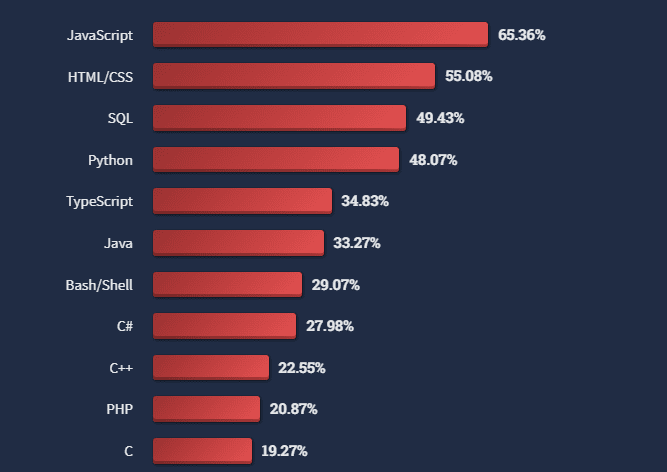
This is developer survey 2022 by Stackoverflow. If you carefully look at it, you have a clear choice of Java Course, C#, and Python as programming languages. The other popular names like JavaScript, SQL, and Typescript you would eventually learn if you get into developing web applications.

Full Stack Developer: Solution building over just writing program

For becoming a software developer Java Technology or C# are good choices. Because both of these languages are part of bigger enterprise solution platforms. You should be aware that an aspiring software developer needs to focus on “solution building” rather than just “programming”. One needs to have sufficient knowledge of all the components and frameworks needed to build a complete software application.

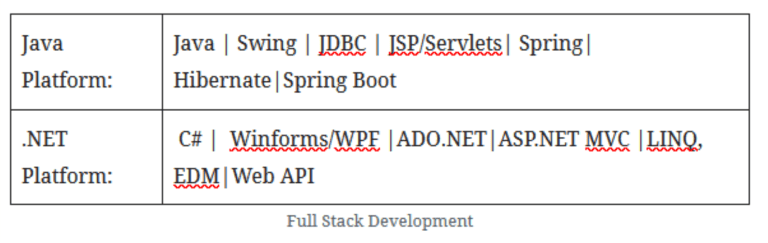
Let us look at both platforms a little more closely.

text

If you carefully observe, there is striking one-to-one correspondence as shown above. In nutshell, both the technologies have similar features to implement a software solution.

How to make the choice between two similar or almost similar technology stacks? The answer is very simple. Whichever technology you would like to work with is the right choice. If you have done a project in your graduation in one of these or related technologies, going in depth for the same technology is a good idea. For example, for one who has worked on Visual Basic, Microsoft technologies would be an obvious choice.

Full Stack Developer: Java or C#

In my opinion, you can start with either Java or C# and master the solution building in it. Once you are an expert in one technology, in reality, you already know the other language, almost. With some training and study, you will be able to handle the other technology in a very short span of time. One of the important points is that both these technologies provide equal job opportunities.

Let us not worry too much about whether it is Java Course or C#. Start with the one which you feel appropriate, and develop proficiency in it. Do not stop there, start acquiring knowledge of the latest frameworks and tools to build the enterprise applications like full-stack. That is, with Java/C#, start learning HTML, CSS, Angular, React, Bootstrap, NO-SQL databases, etc.

For Java full-Stack Course : https://www.seedinfotech.com/full-stack-development/

For .NET full-Stack Course : https://www.seedinfotech.com/full-stack-net/

For short term Java Course : https://www.seedinfotech.com/short-term-basic-courses/#corejava

5 traps to avoid while choosing a technology training course

A
fter graduation, choosing the right training course is a very critical decision for a fresher. It is really a life-changing decision. However, this can turn out to be a disaster if due care is not taken. There are various traps on the way which can through you out of track. Here are some dangerous ones to really avoid.

1. Focus Only on the most glamourous and cutting-edge technology courses.
Technology Courses

There are technologies that are the talk of the town. Everyone is saying something or the other about them. Just google and you will find many technology trend reports saying that there are millions and zillions of jobs available in this field for the next 5 years. Do not take it at just its face value.

Search for a training course, and you will be bombarded with many different ones. Surprisingly, almost every course will promise the greatest career and lots of money. Secondly, the technology taught in the course is most advanced, but there is no pre-requisite knowledge/experience needed to master it. You just come, do the course and work in the glamorous world of this cutting-edge(bleeding-edge?) technology.

Be cautious. Be skeptical. These are all half-truths. This may work in some cases, but not always.

For example, Data science is touted as the sexiest career option. Everyone wants to be a data scientist and earn a hell lot of salary. However, becoming a data scientist is not everybody’s cup of tea. Just a training course is not going to make you a data scientist. Knowledge of data, in-depth understanding of statistical methods, and interest in learning statistics are some of the key pre-requisite, we blissfully ignore.

Please do not focus on just the technologies which are in limelight for now. They may or may not become mainstream. Choose wisely. Focus on technologies that are aligned with your personal interests and preferably academic background. For example, to pursue a career in web application development look for variants of Full Stack development courses.

Full Stack Java

You would choose one which covers Java-Spring, Node js, ASP.NET MVC or PHP.

2. Just Ignore Technologies and skills that build Foundation.
Build Foundation

The second corollary to the focus on technologies with glamour is to ignore or not care about learning the foundation or pre-requisite skills.

Let me give an example of an Android training course. A group of students came for an Android training course. Even when students were told that a good amount of hands-on practice for Java is the prerequisite for learning this course, nobody wanted to learn Java. Everyone was eager to create an Android App and become a billionaire in a day.

Android training was over. Everyone believed that now they can just go and crack the Android interview. The interview went for one hour and can you guess how many questions were asked on Android? Zero. For the entire one-hour duration questions were asked only on Java and you know what would have been the results! Do you want to get into this situation?

Remember, for a web application development career Programming language, OOP concepts, and SQL are key foundations.

3. Ask for a course with the highest Placements/Salary and blindly join it.
blindly join

This is very typical. Imagine you want to build six-packs and instead of going to Gym or taking proper advice from an expert in this area, you went to a shop. Ask for what is the most selling or popular vitamin or protein supplement. Just start consuming it from the next day onwards and will you have a six-pack body in 6 months?

The same is true with learning. Do not attempt to learn the skill because it gives you a higher salary. Check your passion, current skill set, and pre-requisites, and then decide on the most appropriate course. If you are not sure reach us on : 9225520000

4. Because your brother’s cousin’s cousin got a job
Job

Many a time we follow our friends and relatives. We tend to choose the course because someone in our close circle has got a job after doing a particular course in the past. Everyone around us is giving us examples of such a person and how he is overseas working happily etc. etc.

This may work for some cases but not all. It is important to check if the same technology is in demand now? Do you have the pre-requisite skills and interests? If all these conditions are met then this may work for you too, else it is difficult.

5. Choose the shortest possible training course.
Training Course

Course duration is one of the most popular parameters. This very thinking pattern is used in marketing by some training institutes. It is evident in their pitch; which says “become expert, get job, in just a few(1/2/3/4) months”. When you see this, try to understand how much of it is marketing and how much is the real truth.

You will agree that to study any subject and achieve some level of expertise will take some amount of time in terms of one or two months based on the depth required and complexity of the subject. Beyond this, Learner has to apply the learning in a real environment and perform the job function. On average, to master any skill in information technology, a fresher would need at least 3 to 4 months of dedicated work.

In many cases, training programs also provide internships or projects. More often than not, we choose only training and happily skip the internship portion. If you carefully observe, any profession like medicine, an internship is not only compulsory it is vitally important for performance and growth on the job. Cutting the overall cost of training and allied expenses in pursuing a shorter duration program can turn out to be a short-sighted decision.

Friends, do not fall into such traps while choosing a training program. Remember, everyone who has mastery of the right skills will rule the future.

if you are confused or have questions about selecting a course for your bright career, Call On: 9225520000

IT Career – केल्याने होत आहे रे, आधी केलेची पाहिजे

” केल्याने होत आहे रे, आधी केलेची पाहिजे ।। ” हे समर्थ रामदासांचे वचन करीयरच्या दृष्टीने फारच महत्वपूर्ण आहे. करीयर घडवण्यासाठी साठी आधी  प्रयत्न करणे हा रुढार्थ. माझ्या मते त्यात आणखी एक अर्थ दडलेला आहे आणि तो म्हणजे कार्य करा (Do), नुसती पोपटपंची नको. कोणतेही कार्य यशस्वीपणे तडीस नेता येण्यासाठी त्याबद्दलची  माहिती(Knowledge) आणि त्या माहितीचा समस्या सोडविण्यासाठी उपयोग करून दाखविण्याचे कौशल्य( Skill/ Doing ) आत्मसात करणे गरजेचे आहे.  उदाहरणादाखल एखादी जावा (Java)सारखी प्रसिद्ध प्रोग्रामिंगची भाषा घेऊ. ‘ जावा प्रोग्रामिंग ‘ मध्ये  नोकरी मिळण्यासाठी ‘जावा’ ही भाषा वापरून प्रोग्राम लिहिता येणे अत्यंत आवश्यक आहे. नोकरीसाठीच्या मुलाखतीआधी पाठांतर करणाऱ्यांनी कितीही हुशारीने ‘जावा’ बद्दलच्या अवगत माहितीचे प्रदर्शन केले तरीही प्रोग्राम लिहायला सांगितल्यावर अशा वाक् पंडितांची  भंबेरी उडणे स्वाभाविक आहे. विद्यापीठामधून उत्तीर्ण होऊन बाहेर पडणारे बहुतांशी नवीन उमेदवार अशा प्रकारचे  ‘वाक् पंडित ‘ असतील तर औद्योगिक क्षेत्रात काम तरी कोण करणार !

सध्या “instant” गोष्टींचा जमाना आहे. कुणालाही मागे वळून पाहायला वेळ नाही. प्रत्येकजण करीयर आणि त्या अनुषंगाने येणारा पैसा या साठी जमेल तो  “short-cut” घ्यायला तयार आहेत. व्यायामशाळेत जाऊन मेहनत करून शरीर कमवण्यापेक्षा जीवनसत्वांचा(vitamins) किंवा जमल्यास उत्तेजक द्रव्यांचा वापर (भडिमार ?) करून जिंकणे महत्वाचे ठरू पाहत आहे. अशा परिस्थितीत करीयर संबंधी “short-cut” न वापरणे खरच कितपत शक्य आहे?

इच्छा असेल तर असे करणे अजिबात कठीण नाही. आपल्याकडे पदवीसाठीचे अभ्यासक्रम ३ किंवा ४ वर्षांचे असतात. हे अभ्यासक्रम विषयाची सखोल माहिती होण्याच्या उद्देशाने तयार केले जातात, परंतु औद्योगिक क्षेत्र आणि टेक्नोलॉजी यांच्या विकासाची गती जास्त असल्यामुळे काही वर्षानंतर औद्योगिक क्षेत्रासाठी आवश्यक कौशल्ये आणि अभ्यासक्रमात अंतर्भूत कौशल्ये यात तफावत निर्माण होते. ही तफावत बहुतेक वेळेला कार्य कौशल्याची असते आणि ही तफावत कौशल्यावर आधारित शिक्षणाने कमी करता येणे सहज शक्य आहे.

आपल्या पदवीसाठीच्या विहित अभ्यासक्रमात असलेया विषयाची सखोल माहिती करून घेताना [ उदा. डेटाबेस ], त्याच्या बरोबरीने नोकरीसाठी उपयुक्त कार्य कौशल्ये [ SQL  आणि PL-SQL] आत्मसात केली तर नोकरी मिळवणे आणि उत्तरोत्तर प्रगती करणे सोपे जाईल. खालील तक्त्यात अभ्यासक्रमात असलेले विषय आणि त्याच्या बरोबरीने येणारी तांत्रिक कार्य कौशल्ये दिली आहेत. अभ्यासक्रमाबरोबरच तांत्रिक आणि वर्तणूक कौशल्यांमध्ये प्राविण्य मिळवणे नोकरीच्यादृष्टीने महत्वाचे ठरते. अशाप्रकारे नोकरीसाठीआवश्यक कौशल्ये पदवीबरोबरच आत्मसात केली तर अनेक फायदे आहेत. पदवीनंतर नोकरी मिळण्यासाठी उशीर लागणार नाही. त्याबरोबर येणारा ताण आणि पैसे दोन्ही वाचतील. आणि पदवी घेतल्यानंतर वेगवेगळ्या कोर्सेस साठी आणखी पैसे आणि वेळ खर्च करण्याचे कारणच राहणार नाही.

तांत्रिक कौशल्ये [Information Technology Skills]

Subject >Graduation:- BE(IT), BE(CS) BCS, MCM, MCS, BCA [IT related graduations]

Database:- Oracle, SQL Server, SQL, PL-SQL

Operating System:- Unix, shell scripting

Software Quality Assurance:- Software Testing techniques, process and tools

Software Engineering:- Unified modelling language(UML), UML tool

Before Final year Project:-
Full Stack Dev

Web technologies: HTML5, CSS, Java script, Angular/React

Java, Servlet- JSP, Spring MVC, Spring Boot

C# and ASP.NET MVC

वर्तणूक कौशल्ये [Soft skills]

BE(IT), BE(CS) BCS, MCM, MCS, BCA [IT related graduations]

Behavioral Skills

First year:– English Language

Second year:- English Language, Communication and Presentation

Third year:- Quantitative Aptitude, Personality development

Software Development Engineer in Test

T
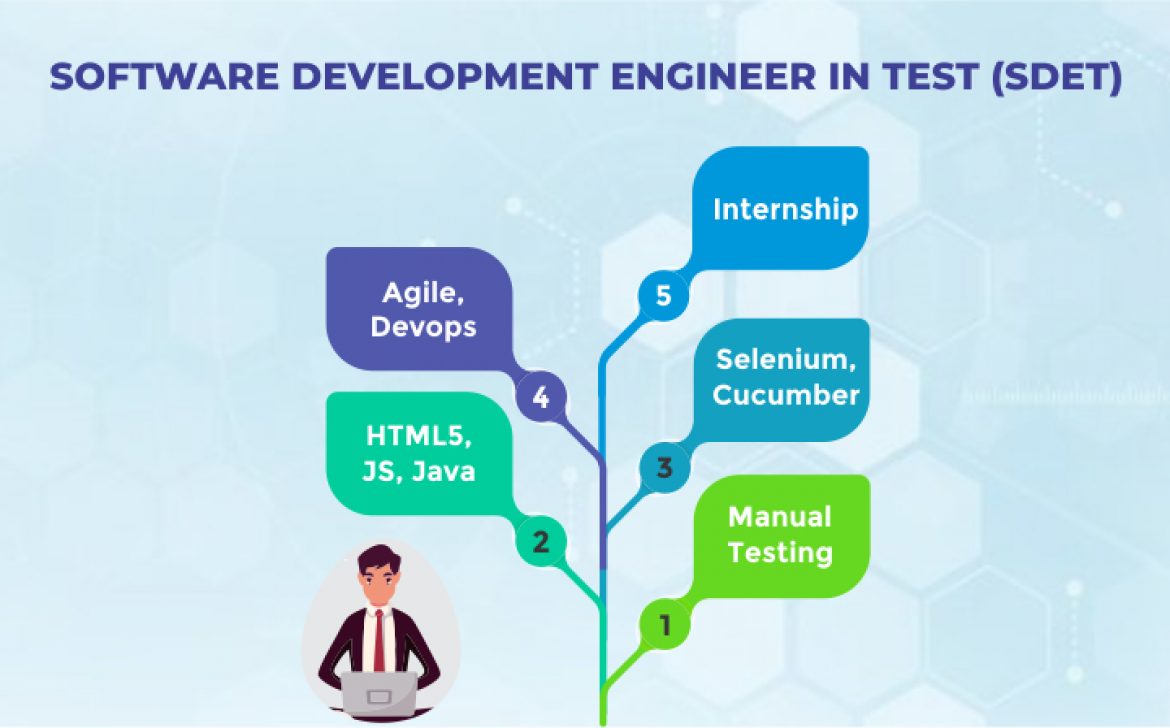
here is a general myth that software testers need not know how to program. In the current era of test automation, treating the application just as a black box is no more enough, software tester should have ability to open the box and provide valuable insights and create automated tests as he/she can. Software Development Engineer in Test (SDET) is the new name of this next-generation software tester.

In the world of Fast-IT and digitalization, disruptive technologies like Social, Mobile, Analytics/Big Data, Cloud(SMAC), and IoT are challenging established definitions of everything. New software development approaches like DevOps are promising faster and quality delivery advocates Agile and automation. Which promises more and more automation and frequent releases. Testing the applications which are developed in these latest technologies is complex and demands not only the knowledge of software testing but even of the development and some nuances of the technology in itself.

The industry has now started demanding a profile of a specialized tester called SDET, Software Development Engineer in Test. SDET is a software tester with expertise in programming, the next step of automation tester. As time will pass, a clear trend is emerging toward a preference for SDETs over only QA engineers.

Considering this demand to create next-generation software Testers or SDETs, leading training institutions SEED Infotech has created a job-oriented course that not only prepares one for current job challenges but gives an edge through the latest technology learning to put one on the fast lane of becoming SDET, the future!

How to Prepare for HR Interview

Only good academic knowledge and technical knowledge are alone is not sufficient for guarantee of JOB. Every company conducts HR round to judge your personal traits, your strengths, your weakness, and your capabilities, and understand that are you fit for this role. The HR round is generally the last round in hiring process.
Especially if you are applying for MNC, you need to be aware of Importance of HR Round. The HR round of this companies is an elimination round. All you need is plan, the road map, and necessary action to reach our destination.
Below are some of the tips that you should keep in mind for HR Interview.

  • Tailor your Resume as per requirement of the company and Job profile. This will surely increase your chances of getting hired if you can justify your knowledge of the skills that match with the company’s requirement. Prepare yourself to answer any questions that can be asked on the basis of your resume.
  • Research about company like achievements, company’s work culture, their products, visibility in LinkedIn or any other social media.
  • Be truthful about anything you are speaking about and be ready with relevant examples.
  • Wear whatever you are comfortable with but make sure to keep it as simple as possible with the minimum number of accessories.
  • Body language is important for HR Interview. Always wear smile on face, make good eye contact.
  • You’re required to show up for the interview on time or even 10-15 minutes earlier, it will help you to be comfortable and allow to focus on the interview.
  • In the Interview you required to listen carefully and attentively. During Interviews, your communication skills represent a major part of your entire personality hence you need to speak very clearly & concisely.
  • Never ask about salary or benefits: Don’t bring up salary question on your first interview unless the employer brings it up first.
  • Always be honest: Don’t lie if you have been laid off or terminated from your previous job. Be open and confident for any part of your employment history that you are not proud of and also provide the valid reasons.
  • Prepare question to ask to the interviewer post the interview: You can show your intelligence and communication skills by asking some thoughtful questions.
  • Follow-up after the interview: It is a good gesture to send a ‘Thank You’ email to the interviewer for his/her time and follow-up on the interview.